In the world of motorsport, precision is doubly important. Anyone who has ever faced the challenge of building a high-performance race car knows this all too well.
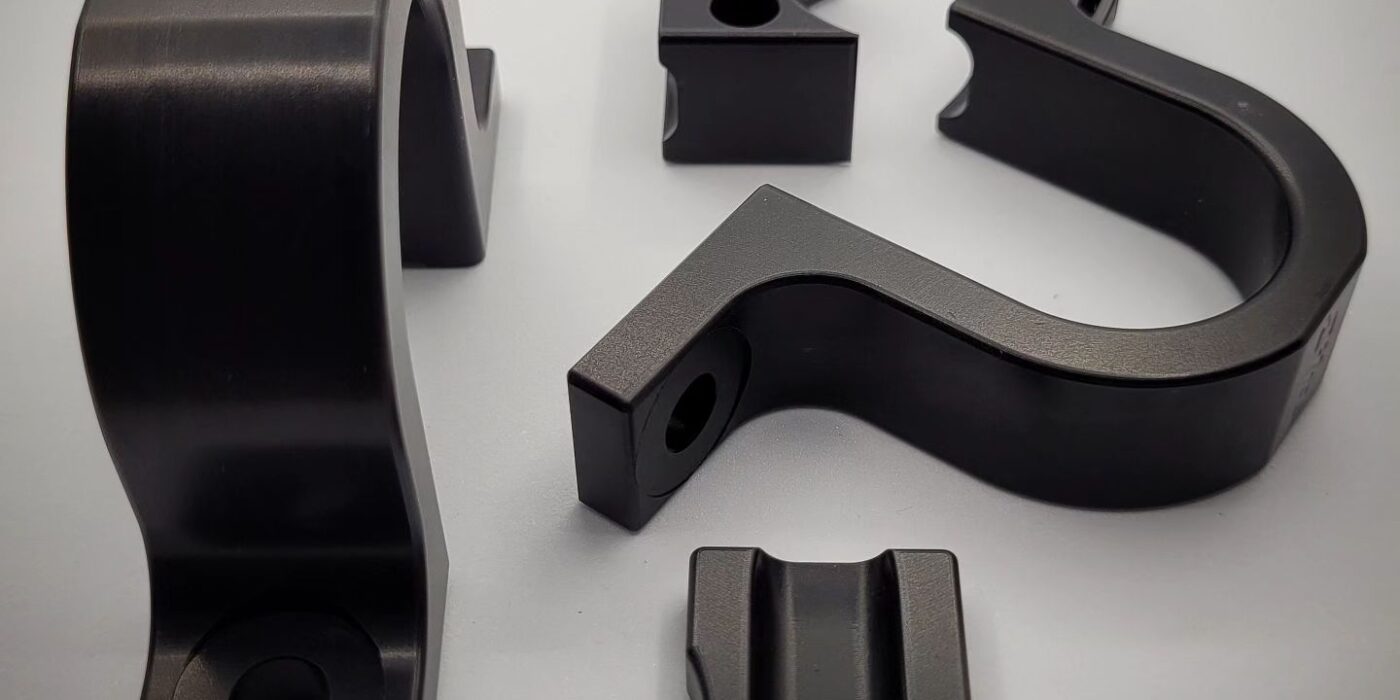
Today, I would like to share with you the story of my latest project – aluminum steering rack clamps for my 1978 VW Golf race car.
The Genesis of the Idea
It all started with a meeting with a man who dedicated a lot of his time to me and my student racing team, sharing his knowledge of suspension systems. It was he who asked me the key question: “Why does a rear-wheel drive formula car need front wheels to drive straight?”.
This question opened my eyes to the importance of a precise steering system in any car, but especially in a race car.
Analyzing the capabilities of my Golf, I discovered that despite its simple design, the steering rack was mounted crookedly. I knew this was a common problem with “Mk1s”, and that modifications to the steering system did not always yield perfect results.
Diagnosis of the Problem
Precise measurements of the body showed that it was in good condition, but the steering rack was indeed crookedly positioned. The culprit turned out to be the unified clamps of the elastic cushions that attached the rack to the body, as well as a factory defect in the mounting plane.
The Solution
In a race car, comfort is not a priority, so I decided to get rid of the elastic mounting elements of the rack. This increased steering precision and minimized the risk of the rack moving during cornering.
The challenge turned out to be the bulges in the body at the mounting points of the clamps. With the help of a “comb”, graph paper and a scanner, I was able to recreate their shape and create prototypes from PLA plastic.
After testing the prototypes, the final clamps were made of 7075 aluminum, used in motorsport.
The Results
The problem of the crookedly mounted steering rack has been solved! The aluminum clamps now provide the precision and stability so important in any competition.